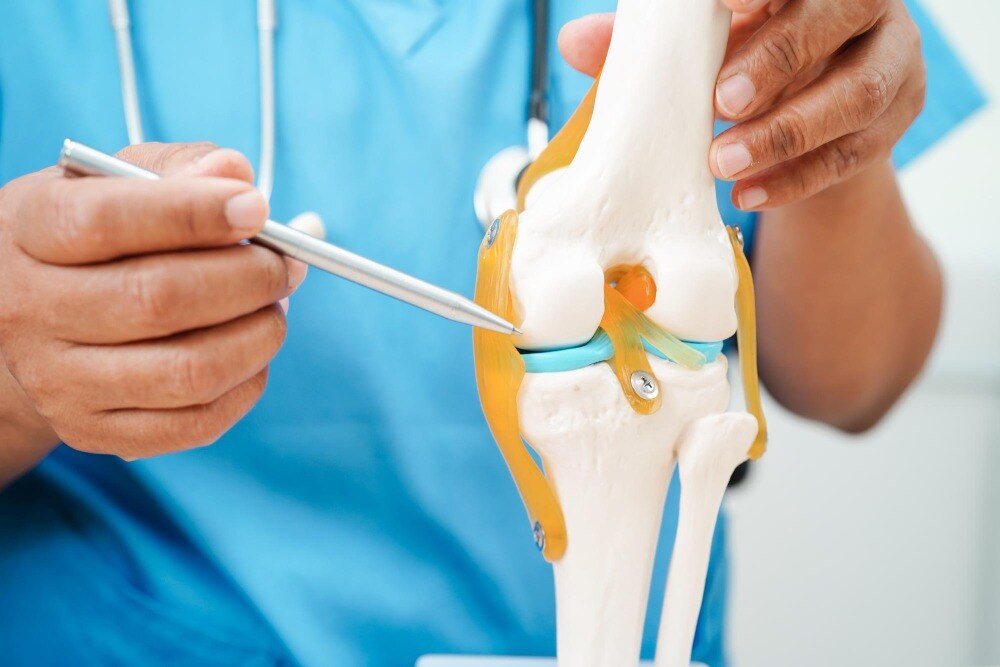
Severe knee damage on an X-ray does not automatically mean you need an operation, while disabling pain and loss of function can justify replacement even without a particular age cutoff. You will learn how doctors confirm end-stage disease, when non-surgical care has been exhausted, which replacement type fits the knee, and what recovery and long-term trade-offs involve.
Key takeaways
- Severe X-ray damage alone does not decide whether you need knee replacement.
- Discuss surgery when pain and disability persist despite appropriate non-surgical treatment.
- Total replacement treats the whole knee; partial replacement preserves healthy compartments.
- Prepare for recovery with safe pathways, support, and essential items within easy reach.
How do doctors confirm that knee damage is advanced enough for replacement?
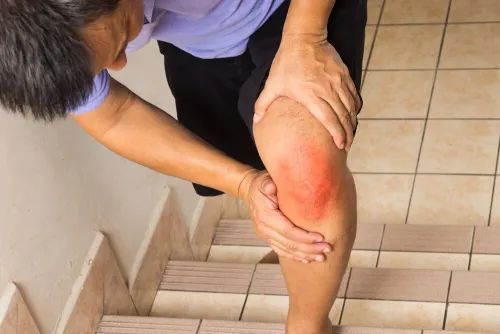
Doctors confirm advanced arthritis by matching a weight-bearing X-ray with your symptoms, examination and daily limitations. The image shows joint-space loss, deformity or severe joint damage, but a “bone-on-bone” arthritis X-ray does not automatically mean surgery. Persistent knee pain, loss of motion, instability, knee deformity and reduced walking ability matter more than the scan alone.
| Cause | Typical clues | What it means for assessment |
|---|---|---|
| Osteoarthritis | Gradual cartilage wear, stiffness and activity-related pain | Replacement is discussed when function remains poor despite treatment |
| Rheumatoid or other inflammatory arthritis | Swelling, prolonged morning stiffness and disease in several joints | Damage may involve multiple compartments and ligaments |
| Post-traumatic arthritis | Pain and deformity after a fracture, ligament injury or major trauma | Alignment and bone quality require careful review |
| Rapidly destructive joint damage | Quickly worsening pain, collapse or marked bone loss | Prompt assessment is needed to identify the cause and protect the joint |
Advice about knee replacement depends on how much pain and disability affect stairs, work, sleep and walking, not on age alone. There is no fixed age threshold. Seek prompt assessment for urgent knee symptoms: a hot, swollen knee with fever; sudden inability to bear weight; acute deformity; severe calf swelling; or breathlessness.
When has non-surgical treatment failed enough to discuss knee replacement?
Non-surgical treatment has failed enough to discuss knee replacement when pain and loss of function remain substantial after a genuine trial of care, not merely because an X-ray says “bone-on-bone.” Compare before and after each treatment: pain, walking distance, sleep, stairs, work, dressing, bathing and exercise.
Physiotherapy before knee surgery, including quadriceps strengthening, can improve strength and mobility but cannot restore lost cartilage. A walking aid, weight reduction for knee arthritis, braces, anti-inflammatory medicines, other pain medicines and knee injections can reduce symptoms without repairing the joint.
| Treatment | What it can improve | What failure looks like |
|---|---|---|
| Physiotherapy and strengthening | Strength, movement and confidence | Daily function remains restricted |
| Walking aid, brace or weight reduction | Load, stability and walking tolerance | You still cannot walk or use stairs adequately |
| Medicines or injections | Pain and inflammation | Relief is brief, incomplete or causes unacceptable effects |
Delay or reconsider the surgery decision if you have an active infection, uncontrolled diabetes, heart or lung disease, poor nutrition, inadequate bone quality, or untreated dental or other infection. Check whether the pain source is the hip, lumbar spine, nerves, tendons or another condition.
Do not extend an ineffective trial indefinitely when severe disability persists; address correctable risks while discussing replacement.
How do total and partial knee replacement differ?
A partial replacement is the more logical operation only when arthritis is mainly limited to one knee compartment and the rest of the knee can still function well.
| Option | What it replaces | When it is more logical |
|---|---|---|
| Partial, or unicompartmental knee replacement | The damaged compartment only | Arthritis matches one compartment, the other compartments remain healthy, major ligaments work, and alignment is suitable |
| Total knee replacement | The damaged surfaces across the knee | Arthritis affects multiple compartments, deformity is substantial, inflammatory arthritis is present, or important ligaments are damaged |
Unicompartmental knee replacement criteria require more than a small area of damage on an X-ray. Your symptoms must match that compartment, examination must show adequate stability, and imaging must confirm that the remaining cartilage and bone are suitable. The practical assessment covers knee compartments, intact ligaments, alignment, range of motion and walking function.
Total knee replacement is usually more appropriate when disease is widespread or the knee is unstable or significantly deformed. Inflammatory arthritis and ligament damage can make a partial implant unreliable.
Neither operation restores a normal knee. A total replacement resurfaces damaged joint surfaces; a partial replacement preserves more of your original knee but leaves other compartments untreated. The decision in total knee replacement versus partial knee replacement depends on disease distribution, ligament stability, alignment, examination and imaging—not simply your preference for the smaller operation.
What should you expect before and during the operation?
A knee replacement preoperative assessment identifies problems that could change the timing or safety of surgery. Expect these steps:
1. Your team reviews your medical history, allergies and previous operations, then completes medication reconciliation. Give precise instructions about blood thinners before knee surgery; do not stop aspirin, warfarin, apixaban or another anticoagulant without the prescribing clinician’s plan.
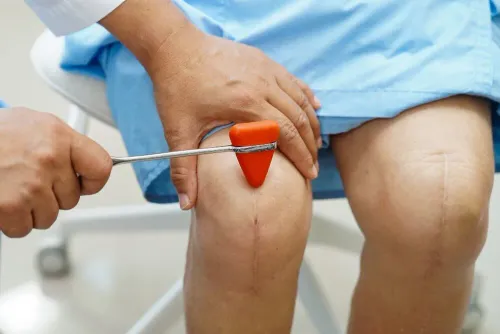
2. Blood tests check blood count, kidney function, glucose and other surgical risks. Medical clearance may involve your physician, cardiologist or anaesthetist. Updated weight-bearing X-rays, and sometimes CT or MRI, confirm alignment, bone quality and damage. A dental infection check and assessment for skin, urinary or other active infection help prevent avoidable complications.
3. Prehabilitation uses quadriceps strengthening, walking practice and mobility exercises to improve your starting strength and rehabilitation readiness. It cannot replace lost cartilage or reverse advanced joint damage.
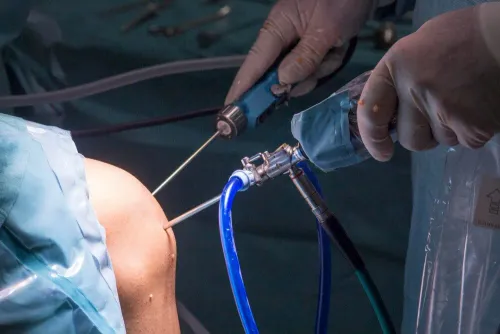
4. During surgery, the surgeon removes damaged cartilage and a thin layer of bone, then places knee replacement metal components on the femur and tibia. A polyethylene spacer, also called a polyethylene bearing, sits between them. Patella resurfacing replaces the kneecap’s underside when its cartilage, symptoms and surgical judgment support it.
Ask about cemented or uncemented fixation, implant bearing materials, the surgical approach and computer-assisted surgery. These are choices to discuss, not automatic proof of a better result.
What are the risks, recovery stages and long-term limits?
Most patients stand and walk with assistance on the surgery day or the following day. The knee replacement recovery timeline depends on pain control, mobility, medical status and home support; hospital stay after knee replacement ranges from same-day discharge to several days.
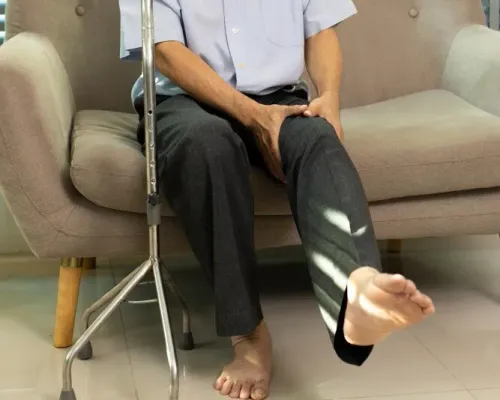
- Early recovery: Prevent blood clots with prescribed medication, ankle exercises and frequent walking. Use pain medicine as directed, keep the dressing clean and dry, and attend walking physiotherapy. Progress from a walker to a cane only when strength and balance are adequate; learn stairs with supervision before going home.
- Weeks to months: Arrange driving only when you can control the vehicle, brake firmly and take approved medicines safely. Return to work depends on duties, while low-impact activity such as cycling, swimming and walking builds endurance. Swelling, warmth, weakness, poor sleep, limited bending and numbness beside the incision can persist for weeks or months.
- Longer term: Improvement continues for six months or longer, but stiffness, instability or residual pain can remain. Knee replacement complications include infection, blood clots, fracture, nerve or blood-vessel injury, loosening, polyethylene wear and revision.
Implant longevity is substantial, not permanent. High-impact sports knee replacement increases mechanical demand. A painful knee replacement needs examination, X-rays, ESR and CRP testing, and sometimes joint aspiration before revision is considered.
How can you prepare your home and choose the right surgical advice?
Arrange caregiver transportation before surgery, and decide who will stay with you during the first few days.
Your knee replacement preparation checklist should cover home preparation after knee surgery: clear walking paths, move daily-use items to waist height, install a raised toilet, provide a firm chair with arms, organise a walker, prepare meals, and plan time away from work. Ask how stairs will be managed.
| Option | What it means | When it fits |
|---|---|---|
| Total replacement | Resurfaces the damaged knee compartments | Arthritis affects multiple compartments, deformity is substantial, or major ligaments are damaged |
| Partial replacement | Replaces one compartment | Disease is limited to one compartment, alignment is suitable, and ligaments work well |
Use these questions to ask orthopedic surgeon knee replacement advice: What confirms the diagnosis? Why does total or partial replacement fit? What fixation, bearing material and implant choice do you recommend? What are your personal complication rates, and how will you prevent infection and clots? What rehabilitation milestones, restrictions and implant longevity should I expect?
What is your process for a second opinion knee replacement?
DR YOGESH NARKHEDE offers a local orthopaedic consultation option in Punawale, Pimpri-Chinchwad, for checking whether your symptoms, imaging and failed treatment justify surgery. An informed assessment matters more than booking an operation.
Related service
Joint Replacement Surgery We provide consultation and surgical care for joint replacement needs. View service → |
Frequently asked questions
How do doctors confirm that knee damage is advanced enough for replacement?
Doctors compare a weight-bearing X-ray with your pain, examination findings, range of motion, stability, deformity, and walking limitations.
When has non-surgical treatment failed enough to discuss knee replacement?
Discuss replacement when persistent pain and reduced function continue despite appropriate options such as exercise-based rehabilitation, weight management, medicines, injections, or walking aids.
How do total and partial knee replacement differ?
Total knee replacement resurfaces the damaged compartments of the knee, while partial replacement treats one damaged compartment and preserves the others when they remain healthy.
What should you expect before and during the operation?
Expect a medical assessment, medication review, imaging review, anaesthesia planning, consent, and instructions for postoperative movement and rehabilitation.
What are the risks, recovery stages and long-term limits?
Recovery progresses from pain control and assisted walking to strengthening and independent activity; risks and long-term limits depend on your health, implant, and rehabilitation.