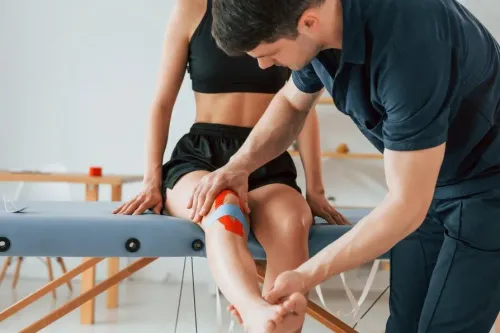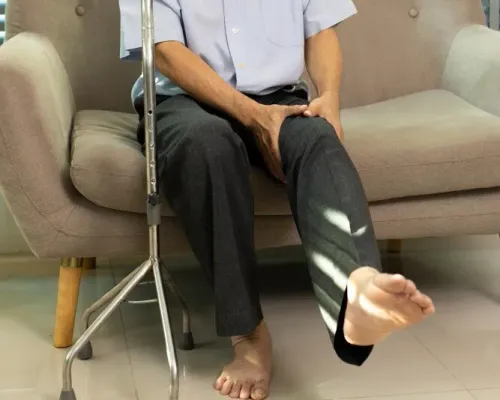
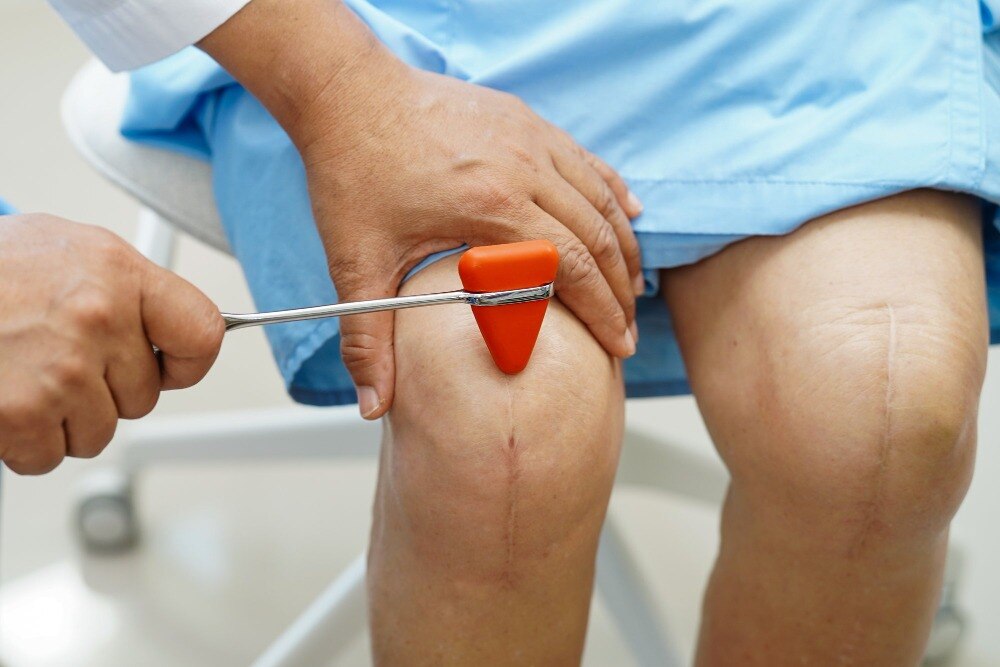
Recovery depends on more than how far your knee bends: strength, balance, walking quality, swelling control and confidence determine whether you can use stairs, bathe, work and manage your home safely. You will learn what progress commonly looks like after total, partial and revision knee replacement, how to structure rehabilitation, and which symptoms require prompt medical advice.
Key takeaways
- Expect assisted movement in week one and greater independence over several months.
- Total knee replacement usually requires more recovery than partial replacement.
- Set goals for walking, strength, balance, swelling control and daily tasks.
- Contact your care team for worsening pain, swelling, fever or wound changes.
What to Expect Each Week After Knee Replacement
The knee replacement recovery timeline usually runs from assisted movement in the first week to stronger, more independent activity over several months. Total knee replacement recovery often takes longer than partial knee replacement recovery, but your strength, swelling, balance and job demands matter as much as the operation.
- Week 1: Stand and transfer from bed or chair with help, using a walker for walking after knee replacement. Physiotherapy begins knee extension, bending, ankle pumps and short walks. Practice stairs one step at a time with a rail.
- Weeks 2–3: Walk farther with the walker, then a cane when your gait is steady. Manage light tasks such as making a meal, folding laundry and showering with safety equipment. Do not carry loads on stairs.
- Weeks 4–6: Many people drive after clearance when they can enter the car safely, control the operated leg and perform an emergency stop without hesitation. Do not drive while taking opioid pain medicine. Desk work may be possible; standing or physical work usually needs longer.
- Weeks 6–12: Progress toward unaided walking, reciprocal stairs and longer shopping or household trips. Build endurance gradually; swelling after activity means you increased demand too quickly.
- Three to twelve months: Strength, balance and mobility can continue improving. Choose walking, cycling, swimming or golf over running and jumping; kneeling may remain uncomfortable.
Contact your surgical team promptly for spreading redness, increasing drainage, wound opening, fever or rapidly worsening function. Seek urgent help for new calf swelling, chest pain or sudden breathlessness.
How Total, Partial and Revision Recovery Differ
Recovery differs because the amount of bone, cartilage and soft tissue changed during surgery affects pain, swelling, strength and how much rehabilitation your knee needs. The total versus partial knee replacement difference is not simply “slow” versus “fast.”
| Procedure | Why recovery differs | What to expect |
|---|---|---|
| Total knee replacement | The entire joint surface is replaced, so muscles and soft tissues need time to regain control and strength. | Walking begins early, but swelling, stiffness, altered gait and reduced endurance can persist for weeks. Functional gains may continue for 6–12 months. |
| Partial knee replacement | Only the damaged compartment is replaced, leaving healthy bone, ligaments and other compartments intact. | Many people regain movement and a natural-feeling gait sooner, but weakness, swelling or stiffness can still delay stairs, driving or work. |
| Revision knee replacement | The surgeon may need to remove the existing implant, manage scar tissue or bone loss, and use a larger or more constrained implant. | Revision knee replacement recovery is usually longer and less predictable, with greater weakness and stricter activity limits. |
Your knee replacement recovery time depends on pre-surgery strength, medical conditions, implant stability, pain control and physiotherapy—not the operation name alone. Treat knee implant recovery as a staged process: early walking protects independence, while forcing range of motion or activity through sharply increasing pain can prolong swelling.
Ask the surgical team which restrictions apply to kneeling, lifting, driving and work.
The Rehabilitation Goals That Restore Safe Independence
A walker is not a failure; it is a safety tool until your knee can support a smooth, controlled step. Knee replacement physiotherapy progresses when you can transfer, stand, turn and walk without knee buckling, a pronounced limp or loss of balance.
- Knee extension: Reach neutral straightening with knee extension exercises. A bent knee disrupts heel strike and increases effort during every step.
- Knee flexion: Build knee flexion after surgery toward about 90 degrees by weeks 2 to 3 and 100 to 110 degrees by weeks 4 to 6, unless your surgeon sets different targets. This supports sitting, stairs and getting into a car.
- Quadriceps control: Practise quadriceps activation after knee replacement through therapist-prescribed tightening, straight-leg raises and progressive strengthening. Poor control causes buckling when you stand or descend stairs.
- Balance and gait: Shift weight evenly, place the heel first, keep the knee aligned over the foot and turn with several small steps instead of twisting.
- Endurance: Add walking time gradually. Stop before fatigue changes your gait; exhaustion increases fall risk.
| Device | Move on when | Do not progress if |
|---|---|---|
| Walker | You walk with even steps and no buckling | You lean heavily or drag the operated leg |
| Cane | You manage turns and short distances without a limp | Pain or weakness worsens each step |
| No device | Balance, gait and endurance remain steady | You need furniture or another person |
DR YOGESH NARKHEDE can assess whether weakness, restricted motion or pain—not the calendar—should determine your next walking milestone.
Related services
Joint Replacement Surgery We provide consultation and surgical care for joint replacement needs. View service → |
Physiotherapy Physiotherapy We provide physiotherapy as part of our orthopedic and recovery-focused care in Punawale, Pune. |
A Practical Home Routine for Exercises, Swelling and Daily Tasks
Plan knee replacement home exercises around daily function, not alongside it. Do the prescribed range-of-motion and strengthening sessions in short blocks, then rest with the leg supported. If pain or swelling clearly increases afterward, reduce the next session and contact your physiotherapist before pushing harder.
- Use ankle pumps while resting, and apply ice and elevation after knee surgery for 15–20 minutes with a cloth barrier; support the ankle and calf so the knee is not forced into a bend.
- Take medicines exactly as prescribed, using pain relief to walk, sleep and exercise rather than waiting until pain becomes severe. Opioids can cause constipation, drowsiness and poor judgment; do not drive while taking them.
- For transfers, use a firm chair with arms, move the operated leg forward, push from the chair, and turn with small steps rather than twisting.
- For stairs after knee replacement, use a handrail, take one step at a time, and follow your therapist’s sequence: the stronger leg goes up first and the operated leg goes down first.
- Shower with a chair and nonslip mat; avoid soaking the incision until your surgical team clears it. Keep the dressing and wound clean and dry as instructed. Incision care after knee replacement includes checking for spreading redness, drainage or separation.
- Keep household activities light: prepare simple meals, carry small loads, and stop before your gait deteriorates. Ask for help with vacuuming, laundry baskets, shopping and low cupboards.
Swelling that worsens through the day can improve with rest, ice and elevation. New one-sided calf swelling or pain needs prompt medical advice.
Expected Discomfort, Warning Signs and Safety Decisions
Pain and swelling often peak in the first several days, then ease gradually over weeks. Bruising can spread down the thigh or calf before fading. Stiffness after sitting, limited bending, weakness and fatigue after exercises or a short walk are expected; recovery is measured in weeks to months, not days.
| Finding | Usually expected | Call the surgical team |
|---|---|---|
| Knee replacement pain and swelling | Improves with rest, elevation, ice and prescribed medicine | Rapidly worsening pain, swelling or loss of function |
| Bruising and stiffness | Bruising fades; stiffness eases with movement and therapy | A sudden change after steady improvement |
| Incision | Mild tenderness and stable, limited redness | Spreading redness, increasing drainage, wound opening or fever |
| Medication effects | Drowsiness and constipation can occur with opioid medicine | Severe sleepiness, confusion, uncontrolled vomiting or inability to pass stool |
Take blood thinners after knee replacement exactly as prescribed, and report unusual bleeding, black stools, blood in urine or a severe headache. Do not drive or make safety-sensitive decisions while taking opioid medicine if you feel drowsy or impaired.
Seek emergency care for blood clot warning signs: new calf pain or one-sided leg swelling, sudden shortness of breath, chest pain, coughing blood, fainting or an unexplained rapid heartbeat. These symptoms can signal knee replacement complications.
Difficulty kneeling alone often reflects scar sensitivity or altered mechanics, not implant failure; use padding only if your surgeon permits it.
Frequently asked questions
How long does knee replacement recovery take?
Recovery progresses from assisted movement during the first week to stronger, more independent activity over several months. Strength, swelling, balance and job demands affect your timeline.
Is partial knee replacement recovery faster than total knee replacement recovery?
Partial knee replacement recovery is often shorter because less of the knee is replaced. Your surgeon’s procedure, strength and rehabilitation progress still determine when you resume activities.
What are the main rehabilitation goals after knee replacement?
Rehabilitation focuses on safe walking, improving knee movement and strength, controlling swelling, restoring balance and completing daily tasks independently.
Which symptoms require medical advice after knee replacement?
Seek medical advice for worsening pain or swelling, fever, wound drainage or opening, increasing redness, calf pain, chest pain or sudden breathlessness.