Recovering from ACL reconstruction is not a matter of waiting a fixed number of weeks and then returning to sport. You need to rebuild motion, swelling control, quadriceps strength, balance and cutting ability in sequence, while using clinical milestones to decide when to progress. By the end, you will know what the operation repairs, how rehabilitation is structured and which signs require review.
Key takeaways
- ACL reconstruction uses a tendon graft when a torn ligament cannot heal reliably.
- Graft choice depends on sport demands, age, knee health and surgeon assessment.
- Progress rehabilitation by strength, swelling, motion and control—not calendar dates alone.
- Return to sport requires objective strength, movement and psychological readiness testing.
What ACL Reconstruction Repairs—and When It Is the Right Choice
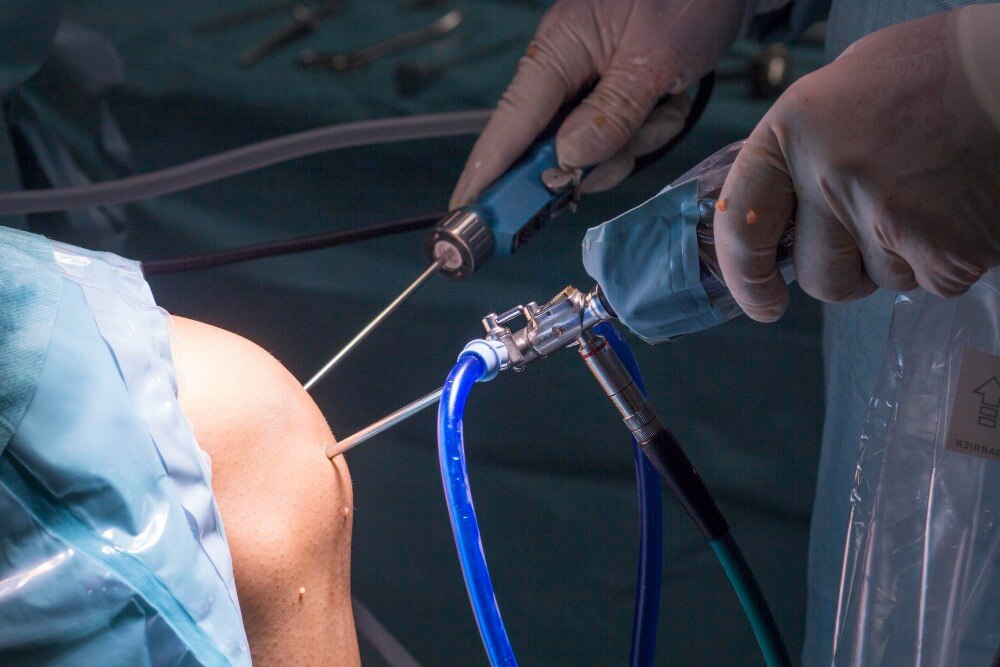
ACL reconstruction replaces a torn anterior cruciate ligament with a tendon graft, usually through arthroscopic surgery. Most complete ACL tears are not stitched back together because the damaged ligament has limited ability to heal reliably in its original position.
The graft restores a stabilising structure, but it is not immediately equivalent to a normal ACL; it undergoes biological remodeling after implantation.
Consider reconstruction instead of structured nonoperative rehabilitation when:
- Your knee repeatedly gives way during daily activities or pivoting sport.
- You plan to return to football, basketball, tennis, skiing or another activity that demands cutting and sudden direction changes.
- Instability persists despite rehabilitation and adequate strength recovery.
- A meniscus tear, cartilage injury or another ligament injury increases the cost of repeated slipping episodes.
Structured nonoperative rehabilitation can suit selected people with a stable knee, lower pivoting demands and no repeated giving-way. A supervised programme should restore extension, reduce swelling, rebuild quadriceps strength and test movement control rather than simply wait for pain to fade.
Prehabilitation before surgery follows the same logic: a calm, mobile knee with an active quadriceps usually gives rehabilitation a better starting point.
The decision is not a race to surgery. Early reconstruction becomes more persuasive when an unstable ACL-deficient knee threatens the meniscus or cartilage, or when your activity goals require reliable pivot control. Surgery also does not erase later osteoarthritis risk, so long-term strength and movement training remain necessary.
How Surgeons Choose the Graft
A patient’s age, activity goals and tolerance for donor-site symptoms often decide the graft more than the tear pattern alone. For young or highly active people, surgeons usually favour an autograft taken from the patient because allografts have a higher failure risk in this group.
| Option | Main advantage | Main trade-off |
|---|---|---|
| Patellar tendon graft | Bone plugs can integrate securely and offer low graft-failure risk | More pain at the front of the knee, especially with kneeling; stiffness or discomfort when climbing stairs can persist |
| Hamstring tendon graft | Smaller incision and less kneeling pain | Harvesting can reduce hamstring strength, and graft size, laxity and fixation require careful assessment |
| Quadriceps tendon graft | Thick graft with strong tissue volume and less impact on the patellar tendon | Front-of-knee soreness and quadriceps weakness can complicate early rehabilitation |
| Allograft ACL reconstruction | No tendon is harvested, so there is no donor-site weakness | Slower biologic incorporation and higher re-injury risk in young, active patients |
The surgeon also considers previous surgery, bone quality, sport demands and whether you kneel for work or daily activities. A graft is not a finished ligament on surgery day: it remodels through ligamentization, so a comfortable knee and healed incisions do not prove mature graft strength.
Your surgeon’s graft-specific rehabilitation plan matters as much as the graft label.
The Criteria-Based Rehabilitation Sequence
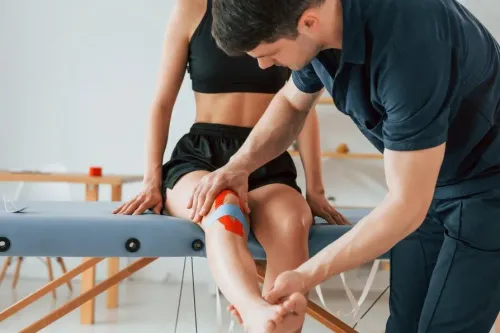
Progress through ACL rehabilitation milestones by meeting knee-based targets, not by counting weeks. A knee that remains swollen or lacks motion is not ready for the next demand.
1. Control swelling and restore motion. Use elevation, prescribed exercises and regular movement to reduce effusion. Regain full knee extension early; persistent loss can change your gait and weaken quadriceps activation, requiring clinical assessment. Track flexion as part of your range of motion after ACL surgery.
2. Re-establish quadriceps control and walking. Straight-leg raises without a lag, controlled knee bending and a stable, increasingly normal gait show useful early control. Weight-bearing and motion limits differ when meniscal repair, cartilage treatment or another ligament procedure was performed, so follow that specific protocol.
3. Build strength and balance. Progress from isometric contractions to closed-chain exercises, single-leg control, step-downs and resistance work when swelling stays settled and movement remains aligned. Compare the operated and unoperated sides rather than accepting a fixed week as proof of readiness.
4. Begin running only with full motion, no activity-related swelling, adequate single-leg control and sufficient strength. A limp, buckling or pain that worsens the next day means running is premature.
5. Add cutting, landing, deceleration and sport-specific drills after strength and hop-test symmetry improve. Include psychological readiness and repeated quality under fatigue; passing one test does not eliminate reinjury risk. Continue strength and movement training after sport returns to protect the knee from instability and excessive loading.
Managing Pain, Restrictions and the Work of Recovery
ACL surgery pain and swelling are usually strongest in the first several days, then fluctuate as activity increases. Use the prescribed pain relief, elevation and cold therapy as directed, and expect stiffness after sitting or completing a new exercise. A short-lived increase after rehabilitation does not prove graft failure.
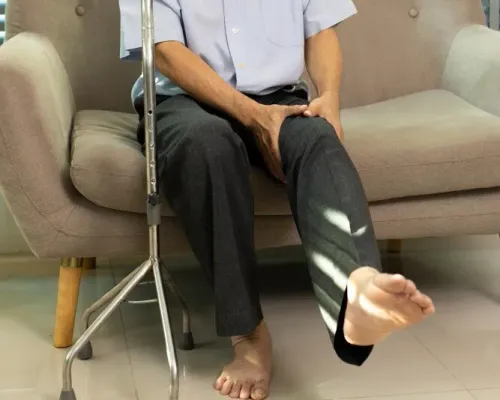
Weight bearing after ACL reconstruction is often allowed early with crutches, but your surgeon’s protocol controls the decision. Meniscal repair, cartilage treatment, another ligament injury, graft fixation concerns or a specific graft protocol can require limited or delayed loading. Do not discard crutches because the calendar says you should be walking unaided.
- Keep the knee fully straight when instructed; losing extension early can create persistent stiffness.
- Complete your home exercises exactly as prescribed, even when clinic visits are less frequent.
- Attend physiotherapy commonly two or three times each week early on, then reduce visits as walking, motion and strength become reliable.
- Follow the ACL physiotherapy schedule based on swelling, extension, flexion, quadriceps control and movement quality, not weeks alone.
Contact your surgical team promptly for a persistently hot or increasingly swollen knee, wound drainage, fever, calf swelling or pain, chest symptoms, locking or a new giving-way episode. These signs can indicate infection, thrombosis, a mechanical problem or reinjury and need assessment rather than extra exercises.
When You Are Ready to Return to Sport
Unrestricted pivoting sport after ACL reconstruction commonly takes about nine to twelve months. Returning before nine months is linked with greater ACL reinjury risk in young athletes, but nine months is not a personal safety guarantee: the graft is still undergoing biologic remodeling, and a pain-free knee does not prove mature ligament strength.
Return-to-sport criteria should combine objective testing with sport-specific performance:
| Test or finding | Ready looks like | Delay return if |
|---|---|---|
| Quadriceps and hamstring strength | At least 90–95% of the opposite side, with good force control | Clear weakness or rapid fatigue |
| Hop tests | Similar distance or time on single, triple, crossover and timed six-metre hops, without a limp or knee collapse | Asymmetry, hesitation, poor landing or valgus movement |
| Movement and sport drills | Controlled deceleration, jumping, cutting and repeated pivots at game speed | Swelling, instability or loss of technique under fatigue |
| Knee status | Full extension, near-full flexion and no activity-related effusion | Persistent swelling, restricted motion or pain |
Do not treat one pass as permanent clearance. Warning signs that matter more than the calendar include giving-way episodes, recurrent swelling, loss of extension, painful catching, fear of cutting and an inability to trust the knee. Passing hop tests does not eliminate a second injury.
A sports-focused assessment with DR YOGESH NARKHEDE can help distinguish a strength deficit from a meniscus, cartilage or stability problem before you resume unrestricted play. Keep rebuilding strength and landing control even after clearance, because the original injury and repeated loading continue to influence later meniscal damage and osteoarthritis.
Related services
Arthroscopy We offer arthroscopic evaluation and treatment for joint problems. View service → |
Sports Injuries We provide orthopedic assessment and treatment for injuries related to physical activity and sports. View service → |
Frequently asked questions
What does ACL reconstruction repair, and when is it the right choice?
ACL reconstruction replaces a torn anterior cruciate ligament with a tendon graft, usually through arthroscopic surgery. It is considered when knee instability, activity demands and the injury pattern make reconstruction appropriate.
How do surgeons choose an ACL graft?
Surgeons compare graft options against your age, sport, work demands, knee condition, previous injuries and the trade-offs of each graft type.
What is a criteria-based ACL rehabilitation sequence?
Rehabilitation advances through goals such as controlling swelling, restoring knee motion, rebuilding strength and improving movement control. Progress depends on meeting functional criteria rather than following dates alone.
When are you ready to return to sport after ACL reconstruction?
Return requires adequate knee motion, minimal swelling, restored strength, controlled single-leg movement and readiness for sport-specific demands. A calendar date alone does not confirm readiness.
Related service
Rheumatoid Arthritis Treatment Rheumatoid Arthritis Treatment We provide orthopedic consultation for rheumatoid arthritis-related joint concerns. View service → |