Knee pain after walking, exercise, rest, or an old injury can come from different structures, and the pattern of symptoms often provides the first useful clue. You will learn how to compare likely causes, manage an early flare safely, prepare for evaluation, and judge when rehabilitation, medication, injections, or surgery deserves consideration.
Key takeaways
- Brief stiffness after rest and grinding point toward osteoarthritis.
- Prolonged morning stiffness, warmth, and several swollen joints need medical assessment.
- Reduce aggravating activity during a flare, then return gradually as pain settles.
- Seek prompt care after major injury, inability to bear weight, or a hot swollen knee.
What pattern points to arthritis, overuse, injury, or referred pain?
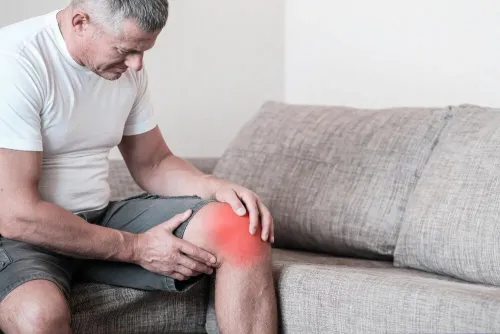
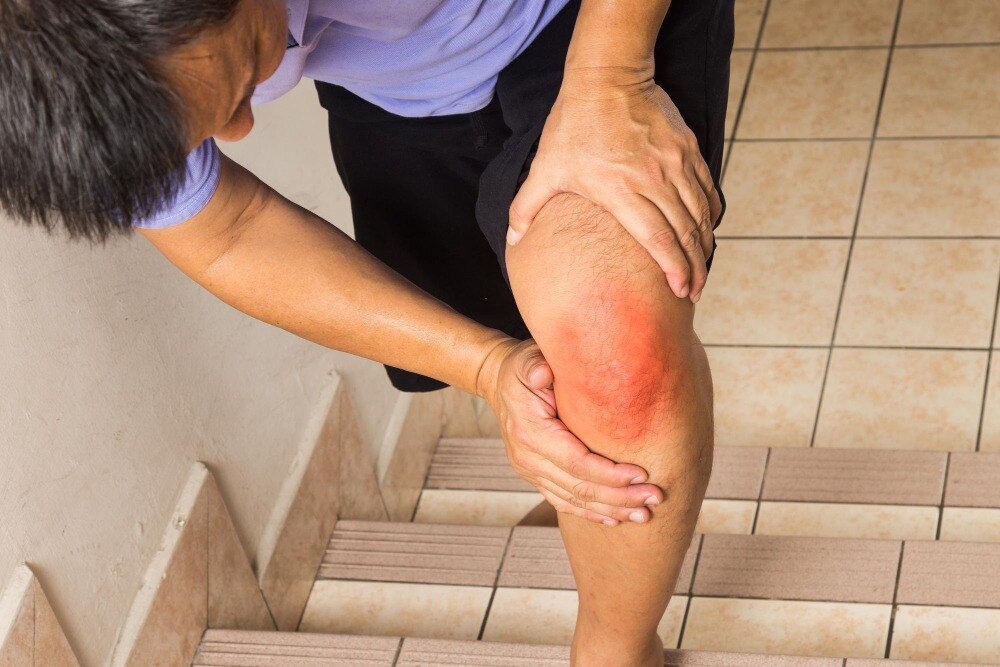
Timing, location, triggers, and associated symptoms usually separate arthritis-related knee pain from overuse knee pain or a specific injury. Osteoarthritis causes activity-related pain, brief stiffness after rest, grinding, reduced range of motion, and sometimes swelling. Rheumatoid arthritis more often causes prolonged morning stiffness, warmth, visible swelling, and symptoms in several joints.
| Pattern | Features that point toward it |
|---|---|
| Osteoarthritis | Pain with walking or stairs; stiffness after sitting; grinding; reduced motion |
| Overuse | Gradual pain around or behind the kneecap after increased running, squatting, stairs, or training; little swelling |
| Meniscus injury | Joint-line pain, swelling after twisting, catching, or painful deep bending; true locking needs assessment |
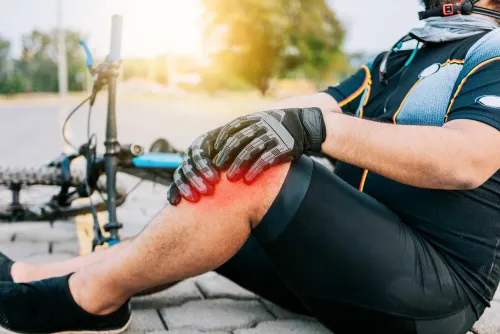
| Ligament injury | A pop, rapid swelling, giving-way, or instability after a twist or impact; ligament injury symptoms can persist after an ACL tear |
| Stress fracture | Focal tenderness and worsening pain with weight-bearing; stress fracture knee pain can progress to pain at rest |
| Referred pain | Hip disease can cause groin or thigh pain felt at the knee; spine-related pain may include back pain, tingling, or numbness |
A previous ACL injury, meniscus tear, fracture, or knee operation raises the chance of post-traumatic arthritis, but pain after injury does not prove progressive damage. A hot red swollen knee with fever, sudden major swelling, deformity, inability to bear weight after trauma, a locked knee, calf swelling, or chest pain with breathlessness needs urgent assessment.
How should you manage a flare and return to activity?
For the first 24 to 72 hours, reduce the training load that provokes pain: stop running, deep squats, hard stairs, or sport drills, but use relative rest rather than bed rest or prolonged immobilization.
For knee pain relief, use ice compression elevation: wrapped ice for 15–20 minutes, a comfortable elastic sleeve, and elevation above heart level. Gently bend and straighten the knee within a tolerable range; complete rest causes stiffness and deconditioning.
| Activity | During a flare | Return strategy |
|---|---|---|
| Walking | Take shorter, flatter walks | Add minutes before adding speed |
| Running | Stop impact exercise | Restart with walk-run intervals |
| Squatting or stairs | Reduce depth and repetitions | Restore range before resistance |
| Cycling or swimming | Substitute if cycling is comfortable and swimming does not worsen symptoms | Increase duration before intensity |
| Sports training | Pause cutting, jumping, and drills | Add one session or intensity variable at a time |
Some discomfort during strengthening is acceptable, but escalating pain or next-day swelling means the load was too high. Build quadriceps, hip, and calf strength, then add flexibility and balance work; a consistent home programme often beats an ideal plan you cannot follow.
- Support choices: well-fitting footwear improves comfort but cannot correct arthritis or a torn ligament; weight reduction can improve pain and function but is not a prerequisite for exercise.
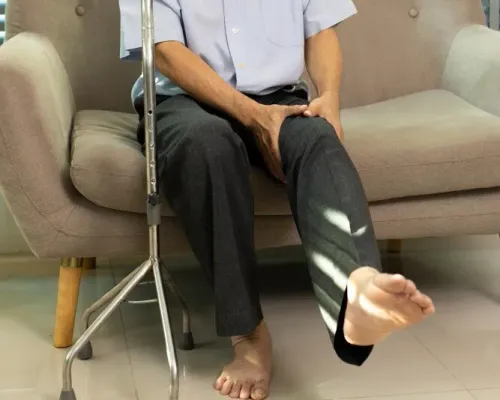
- A cane held opposite the painful knee reduces load; a brace may improve confidence or stability, but neither repairs cartilage or replaces rehabilitation.
- Seek assessment instead of exercising through a hot, markedly swollen knee, fever, inability to bear weight, or a newly locked knee.
What information and tests help identify the cause?
A careful symptom record and focused examination often identify likely osteoarthritis without scans. Before consultation, write down:
- When the pain began, whether it followed an injury, and its exact location: kneecap, joint line, back, or side.
- Which activities trigger it, including walking, stairs, squatting, running, or sitting; record walking distance and stair limits.
- Whether pain occurs at rest or on waking, and how many minutes morning stiffness lasts.
- Episodes of swelling, catching, true locking, grinding, or giving way.
- Previous ACL or meniscus injuries, fractures, injections, or knee operations.
- Every medicine and supplement you use, including dose and frequency.
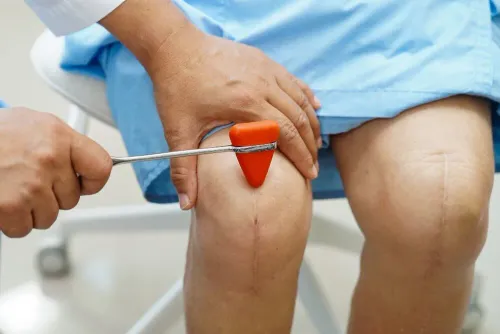
Activity-related pain, brief morning stiffness, reduced movement, and typical examination findings can support osteoarthritis without imaging. Pain severity and X-ray severity do not reliably match, so function, examination, goals, and symptoms matter more than an image alone.
Request a standing knee X-ray when the diagnosis is uncertain, alignment or joint-space loss matters, or another condition is suspected. A knee ultrasound can assess fluid, cysts, tendons, and superficial structures.
A knee MRI is reserved for suspected ligament injury, stress fracture, repairable traumatic tear, or unexplained persistent symptoms; degenerative meniscus findings often do not change treatment.
Several painful joints, morning stiffness lasting over 30 minutes, or visible swelling justify blood tests for rheumatoid arthritis and rheumatology assessment. Crystal disease may require joint-fluid testing rather than imaging alone.
Which treatments help, and when do procedures become reasonable?
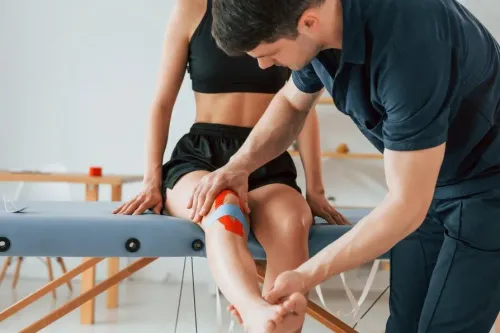
Start with the least invasive option that matches the cause. Physiotherapy for knee arthritis and a home programme improve strength, movement, balance, and function; they cannot regrow worn cartilage or repair a completely torn ligament.
| Option | Helps with | Cannot fix |
|---|---|---|
| Physiotherapy and home exercise | Pain, weakness, stiffness, and confidence | Severe mechanical blockage |
| Topical NSAIDs | Local osteoarthritis pain with less whole-body exposure | Structural damage |
| Oral NSAIDs | Short-term pain and inflammation | Cartilage loss |
| Corticosteroid knee injection | Short-term flare relief | Cartilage repair |
| Hyaluronic-acid injection | Relief for some people | Reliable or permanent improvement |
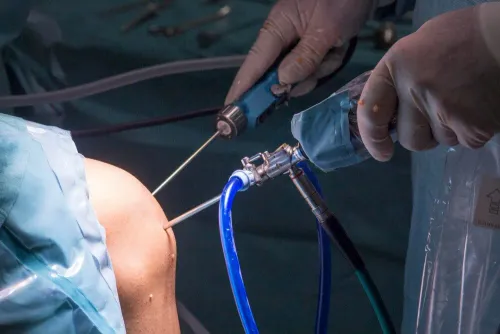
| Arthroscopy | A true locked knee, loose body, or selected repairable traumatic tear | Uncomplicated arthritis |
| Knee replacement | Persistent disabling pain and function loss after non-surgical care | A painless X-ray finding alone |
Check NSAID suitability with a clinician if you have kidney disease, ulcers, heart disease, use blood thinners, or are pregnant. Avoid duplicate pain medicines, including two NSAIDs; oral treatment needs the lowest effective dose for the shortest practical duration.
Arthroscopy for meniscus tear versus arthritis replacement is not an X-ray decision. Replacement becomes reasonable when pain, stiffness, or limited walking, sleep, work, or sport continues despite appropriate care; “bone-on-bone” alone is insufficient.
After either operation, protect wounds from soaking, follow walking progression and exercises, and address swelling and stiffness early. Driving, work, and sport return depend on strength, movement, pain, and the operation; replacement usually requires a longer recovery. DR YOGESH NARKHEDE can match examination findings and goals to the least invasive suitable option.
Related services
Sports Injuries We provide orthopedic assessment and treatment for injuries related to physical activity and sports. View service → |
Arthroscopy We offer arthroscopic evaluation and treatment for joint problems. View service → |
When should you stop self-managing and seek assessment?
Stop self-managing and seek help when knee pain changes your function or suggests a serious problem. Your age, body weight, leg alignment, previous operations, injury history, medical conditions, work demands, and sport goals all affect whether exercise, medication, bracing, or surgery fits.
| Option | Choose it when | What happens next |
|---|---|---|
| Continued self-management | Symptoms are mild, improving, and do not restrict walking, sleep, work, exercise, or knee movement | Continue a graded plan; do not increase training sharply |
| Physiotherapy assessment | Pain follows overuse or a settled injury, and strength, balance, movement, or confidence remain limited | A therapist assesses movement and progresses rehabilitation |
| Orthopedic consultation | Pain repeatedly causes knee pain functional limitation, or rehabilitation is not improving function | An examination determines whether imaging, injections, or other treatment is appropriate; this helps answer when to see an orthopedic doctor for knee pain |
| Urgent medical assessment | Any knee pain red flags are present | Seek prompt care rather than exercising through symptoms |
Arrange routine evaluation if pain repeatedly limits walking, sleep, work, exercise, or range of motion, or if a properly graded rehabilitation plan has stopped improving function. Physiotherapy is appropriate for many activity-related flares and recovery after injury, but prolonged self-treatment is not a substitute for assessment.
Seek urgent care for inability to bear weight after significant injury, a deformed knee, a newly locked knee, suspected fracture, or sudden marked swelling. A hot, red knee with fever or feeling systemically unwell needs urgent assessment. Calf swelling, chest pain, or breathlessness requires immediate medical attention.
Frequently asked questions
How can you tell whether knee pain comes from arthritis, overuse, or an injury?
Arthritis often causes activity-related pain, stiffness after rest, grinding, reduced movement, or swelling. Overuse pain follows a repeated activity and improves with rest. An injury usually has a clear event, such as a twist, fall, impact, or sudden change in direction.
How should you manage a knee-pain flare and return to activity?
Reduce or pause the activity that increases pain, use relative rest, and choose low-impact movement within comfortable limits. Resume activity gradually when walking and daily movements improve, increasing one factor at a time.
What information and tests help identify the cause of knee pain?
Report when the pain began, its exact location, triggers, swelling, stiffness duration, injury mechanism, affected joints, and treatments tried. Examination guides testing; X-rays assess bone and joint-space changes, while ultrasound or MRI can assess soft tissues when the findings require it.
Which treatments help knee pain, and when are procedures reasonable?
Treatment can include activity modification, strengthening and mobility exercises, weight management when relevant, pain relief, and rehabilitation. Procedures become reasonable when symptoms persist despite appropriate nonsurgical care, the diagnosis is clear, and pain or functional loss remains substantial.
When should you stop self-managing knee pain and seek assessment?
Arrange assessment for persistent or recurring pain, progressive swelling, restricted movement, locking, instability, or pain that limits normal activities. Seek urgent care after a major injury, inability to bear weight, a hot red swollen knee, fever, or sudden severe pain.
Related services
Joint Replacement Surgery We provide consultation and surgical care for joint replacement needs. View service → |
Rheumatoid Arthritis Treatment Rheumatoid Arthritis Treatment We provide orthopedic consultation for rheumatoid arthritis-related joint concerns. View service → |
General Orthopedics We assess and treat a range of musculoskeletal concerns involving bones, joints, ligaments, tendons, muscles and nerves. View service → |