A twisting knee injury followed by a pop, rapid swelling or a feeling that the joint is giving way needs more than a self-test or an MRI report. You will learn how to protect the knee, understand the assessment and treatment choices, and judge readiness for sport using function rather than a calendar date.
Key takeaways
- Protect the knee, reduce swelling, and seek assessment after a suspected ACL tear.
- X-rays rule out fractures; MRI shows ACL, meniscus, cartilage, and other soft-tissue injuries.
- Choose rehabilitation or reconstruction based on instability, sport demands, and associated damage.
- Return to sport after passing strength, movement, hopping, and sport-specific tests—not by date alone.
Recognise a Possible ACL Tear and Protect the Knee in the First 72 Hours
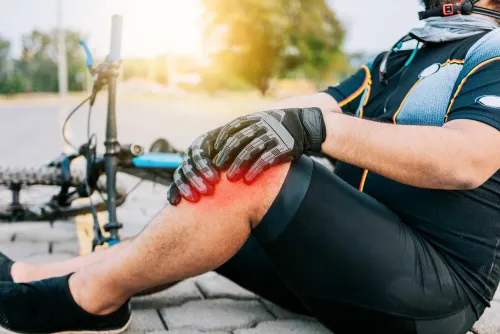
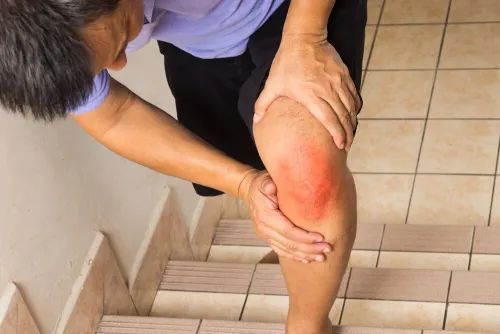
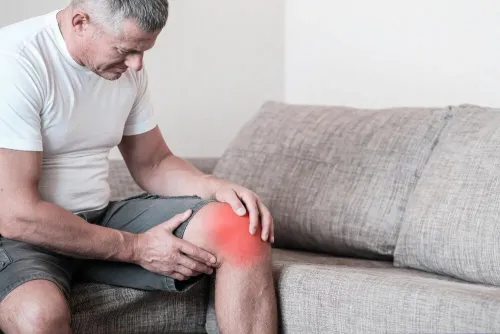
A twisting knee injury during cutting, landing, or contact can produce a popping sensation, immediate pain, rapid knee swelling, and difficulty bearing weight. A possible ACL tear becomes more concerning when the knee feels unstable or gives way, but these signs also occur with meniscus, fracture, or other ligament injuries.
During the first 24 to 72 hours:
- Stop playing and do not test the knee by repeatedly walking, pivoting, or squatting.
- Protect it with crutches or assistance if bearing weight hurts; keep the knee in a comfortable position.
- Apply a cold pack wrapped in cloth for 15 to 20 minutes at a time, with breaks between applications.
- Use light compression with an elastic bandage if it does not increase pain, tingling, numbness, or colour change.
- Elevate the leg above heart level when resting.
- Arrange prompt assessment by an orthopaedic clinician or emergency service, even if swelling settles.
Seek urgent evaluation for a visibly deformed knee, a cold, pale, blue, or numb foot, inability to bear weight, severe or rapidly worsening swelling, uncontrolled pain, or a knee locked in one position.
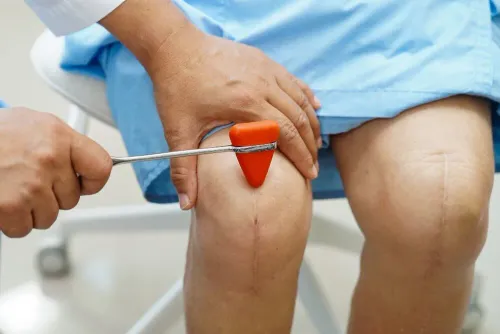
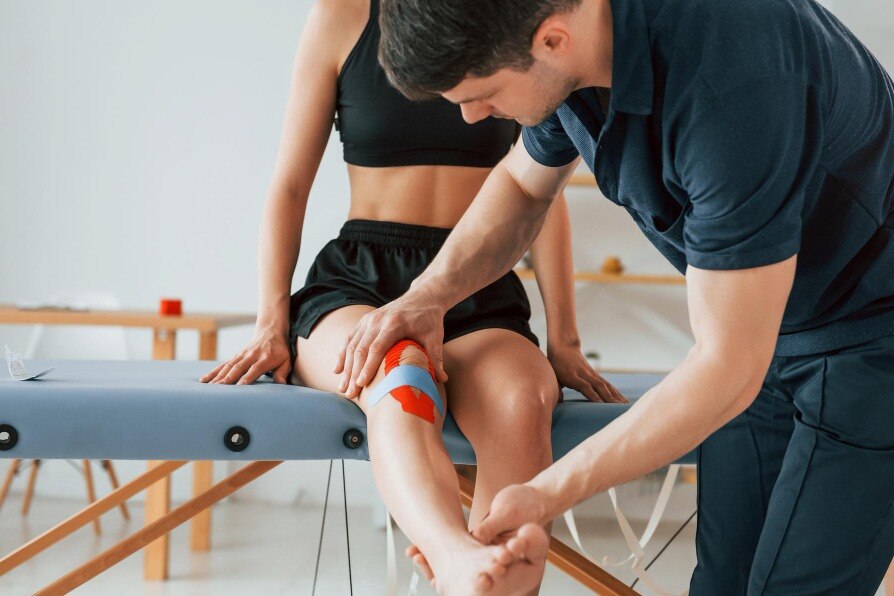
A clinician will assess the injury history, range of motion, effusion, and ligament stability with tests such as Lachman and pivot-shift, while checking the menisci and other ligaments.
How Clinicians Confirm the Injury and Interpret X-Ray and MRI Findings
An ACL tear is confirmed by matching the injury mechanism and symptoms with examination findings, not by reading an MRI in isolation. A twisting injury, a popping sensation, rapid swelling and giving-way raise suspicion, but meniscal, collateral-ligament, patellar and fracture injuries can produce similar complaints.
The clinician checks:
- Lachman test: forward movement of the shin compared with the thigh, with a soft or absent endpoint, supports ACL insufficiency.
- Pivot-shift test: forward slipping and reduction of the shin during rotation demonstrates functional instability, although pain or swelling can limit the test.
- Range of motion and knee effusion: loss of extension, restricted bending or a tense swollen knee helps indicate the severity and timing of injury.
- Joint-line tenderness and ligament stability: these findings help separate meniscal and collateral-ligament injuries from an isolated ACL tear.
An X-ray does not show the ACL itself. It identifies fractures, a tibial-spine avulsion, dislocation or abnormal alignment that changes immediate treatment. MRI provides the detailed soft-tissue assessment: it confirms a partial or complete ACL tear and maps meniscal, cartilage, bone and collateral-ligament damage.
Those associated findings matter because a repairable meniscal tear or significant cartilage injury can alter rehabilitation and the decision about surgery.
Choose Between Rehabilitation Without Surgery and ACL Reconstruction
Structured rehabilitation without surgery can manage a partial ACL tear or some isolated complete ACL tears when your knee feels stable, you have no repeated giving-way, and your lifestyle does not require frequent pivoting, cutting or jumping. You must accept activity limits and complete a supervised programme rather than simply waiting for pain to settle.
| Option | What it means | When it applies |
|---|---|---|
| Nonoperative ACL rehabilitation | Strength, movement control and gradual activity training without reconstruction | Stable-feeling knee, low-demand sport or lifestyle, isolated injury, and no recurrent giving-way |
| ACL reconstruction | A graft restores mechanical restraint to an ACL-deficient knee | Repeated instability, high-demand pivoting sport, or associated injuries needing surgical treatment |
Reconstruction is the stronger option when the knee repeatedly buckles, because each episode can damage the meniscus or articular cartilage. A repairable meniscal tear, multiple-ligament injury, or significant cartilage injury can also shift the decision toward combined surgery; meniscal repair often creates stricter early rehabilitation limits.
For an athlete who needs to return to football, basketball, kabaddi, tennis or similar sport, continued instability makes nonoperative ACL rehabilitation less reliable. When reconstruction is indicated, the AAOS supports performing it within five months of injury; swelling, lost extension, associated injuries and individual circumstances determine the actual timing.
Surgery restores stability, not instant athletic readiness, so rehabilitation must rebuild strength, running, landing, deceleration and cutting control before return.
Prepare for Reconstruction and Plan Treatment Around Associated Injuries
A swollen, stiff knee is a poor setting for reconstruction. Prehabilitation restores full extension, reduces swelling, rebuilds quadriceps control and teaches safe crutch use; operating before motion returns raises the risk of postoperative stiffness.
1. Set ACL reconstruction timing with the surgeon. The AAOS guideline supports reconstruction within five months when surgery is indicated, but the date depends on swelling, range of motion, meniscus or cartilage damage, school or competition demands, and medical readiness.
Delaying for prolonged nonoperative care can expose a repeatedly unstable knee to further meniscus and cartilage injury.
2. Ask how the graft fits your age and sport. An autograft from your own patellar tendon, hamstring or quadriceps tendon is generally preferred for young, active athletes because an allograft has a higher failure risk in this group.
Bone–patellar-tendon–bone offers strong fixation but can cause anterior-knee or kneeling pain; hamstring grafts usually spare kneeling comfort but can leave hamstring weakness.
3. Clarify the associated-injury plan. A repairable meniscus tear, especially in a region with healing blood supply, may deserve repair rather than removal. Repair preserves shock absorption but brings stricter weight-bearing and bending limits than isolated reconstruction; cartilage defects can also change loading and rehabilitation.
4. Discuss pain control before surgery. A plan may combine prescribed medication, ice, elevation and regional anaesthesia while limiting opioid use; report uncontrolled pain, calf swelling or medication side effects promptly. An orthopedic consultation with DR YOGESH NARKHEDE can align the reconstruction plan with these findings and restrictions.
Young athletes also need neuromuscular training for landing, deceleration and cutting because both knees remain vulnerable after return to pivoting sports.
Related services
Sports Injuries We provide orthopedic assessment and treatment for injuries related to physical activity and sports. View service → |
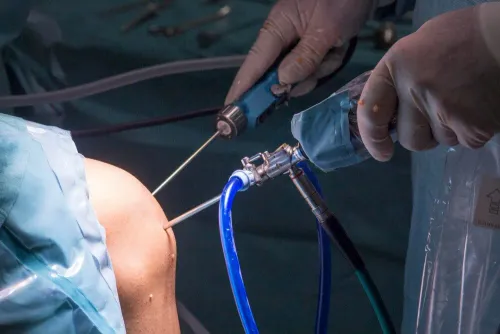
Arthroscopy We offer arthroscopic evaluation and treatment for joint problems. View service → |
Use Objective Return-to-Sport Tests Instead of a Calendar Date
Feeling ready is not the same as being ready. Return to sport after ACL reconstruction should follow restored function, not a date on the calendar; returning before nine months to a level-one pivoting sport is associated with higher reinjury risk in young athletes.
1. Confirm a quiet knee: minimal or no swelling, full extension and flexion, and no episodes of giving-way. Persistent effusion or lost extension means the knee is not ready for harder loading.
2. Restore capacity in both legs. Test quadriceps strength, hamstring and calf strength, balance, and power with side-to-side comparisons. A single-leg hop test is useful, but passing one hop test does not prove graft readiness or safe competition; your clinician should use a battery of strength and hop tests with protocol-specific cutoffs.
3. Demonstrate control under pressure. You must land softly with the knee aligned over the foot, control deceleration, change direction without the trunk collapsing, and react to sport-specific decisions rather than rehearsed movements.
4. Complete progressive running, jumping, cutting, and full-training exposure without swelling or loss of control. Psychological readiness matters too: fear of movement or uncertainty during cutting deserves attention, not dismissal.
Neuromuscular training teaches landing, trunk control, deceleration, and cutting mechanics. It can lower risk to the reconstructed and opposite knee, but it cannot eliminate reinjury. Continue these drills after clearance, because fatigue and fast decisions expose weaknesses that clinic tests can miss.
Frequently asked questions
What should you do during the first 72 hours after a possible ACL tear?
Protect the knee from twisting and unnecessary weight-bearing, use ice wrapped in a cloth, elevate the leg, and arrange medical assessment. Seek urgent care for severe pain, deformity, numbness, a cold foot, or inability to bear weight.
How do clinicians confirm an ACL injury?
Clinicians assess the injury mechanism, swelling, range of motion, and knee stability using tests such as the Lachman test. X-rays identify fractures, while MRI shows the ACL and associated meniscus, cartilage, bone, and ligament injuries.
When is ACL reconstruction preferred over rehabilitation without surgery?
Rehabilitation without surgery may suit a stable knee and lower-demand activity. Reconstruction becomes more relevant when the knee repeatedly gives way, you play pivoting sports, or associated injuries need surgical treatment.
How are associated injuries considered before ACL reconstruction?
Clinicians review MRI findings and examine meniscus, cartilage, bone, collateral ligaments, and other structures. Treatment timing and surgical planning change when these injuries require repair or additional protection.
What tests should you pass before returning to sport after ACL treatment?
You should demonstrate restored knee motion, minimal swelling, adequate quadriceps and hamstring strength, controlled single-leg movements, successful hopping tests, and sport-specific drills without pain or giving way.
Related service
Physiotherapy Physiotherapy We provide physiotherapy as part of our orthopedic and recovery-focused care in Punawale, Pune. |