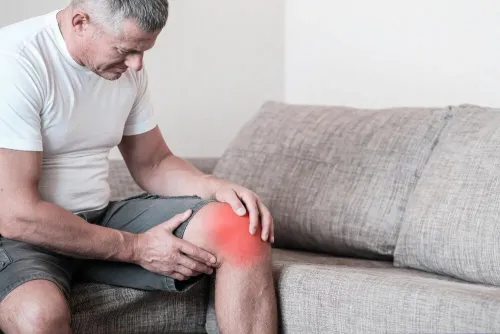
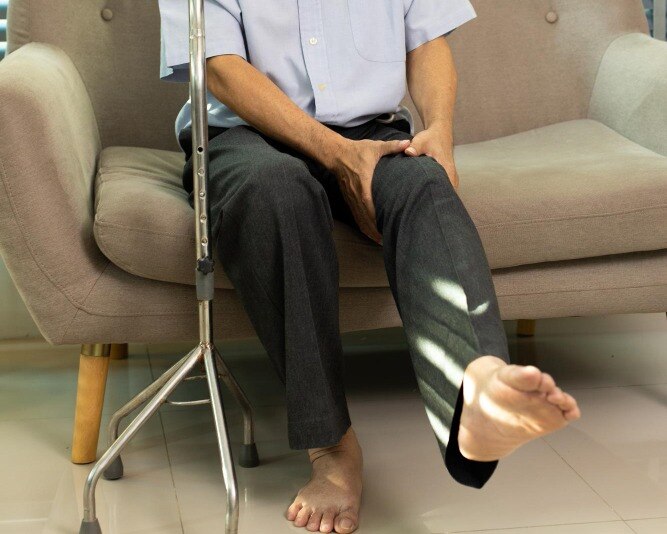
A fall from standing height can break an older adult’s hip, pelvis, wrist, vertebra or ribs, even when the injury looks minor and the person can still walk. You will learn which signs require urgent assessment, how to protect the person before help arrives, how hidden fractures are diagnosed, and how treatment can reduce the risk of another fracture.
Key takeaways
- Treat severe hip pain or inability to stand as an urgent medical problem.
- Keep the person still and avoid pulling or forcing an injured limb.
- Ask about CT or MRI when pain persists despite a normal X-ray.
- Review bone strength, balance, medicines and home hazards after recovery.
Why a Minor Fall Can Cause a Serious Fracture
A fall from standing height can break an older adult’s bone because strength depends on more than bone density. Osteoporosis reduces density, while poor bone quality, altered bone structure, weak muscles and poor balance increase the force reaching the skeleton. This is why a fragility fracture can follow a stumble, not just a major accident.
Common injury sites include the hip and pelvis, wrist, upper arm, vertebrae and ribs. Hip fracture symptoms include hip or groin pain and pain when bearing weight. A pelvic fracture after a fall can cause groin, buttock or low-back pain even when the first movement seems possible.
Seek urgent assessment for:
- Inability to stand or walk, or pain with weight-bearing
- A shortened or outward-turned leg
- Wrist deformity, marked swelling or bruising
- Severe back pain or focal tenderness over the spine, pelvis or ribs
- Hip, groin or limb pain that persists or worsens with movement
- New pain after a fall when the injury site is difficult to identify
Bruising and swelling cannot distinguish a fracture from a sprain. Mild pain or the ability to walk does not rule out a small crack, pelvic fracture or vertebral compression fracture. Older adults with osteoporosis and falls history need examination when pain persists, because some fractures require imaging beyond an initial assessment.
What to Do Immediately After the Fall
Do not make the person stand or walk to test the injury. Walking can worsen a hip, pelvic, spinal or limb fracture and can turn a stable injury into a displaced one.
- Keep the person still and reassure them while help is arranged. Do not pull, rotate or straighten an arm, leg, neck or back.
- Support the injured area in the position you found it. Use folded blankets or cushions around the limb, not forcefully underneath a painful joint.
- Place a cold pack wrapped in a cloth over swelling for 10 to 15 minutes, then remove it. Never put ice directly on the skin.
- Call emergency services immediately for severe pain, visible deformity, inability to move, suspected hip or spinal injury, a head impact, loss of consciousness or confusion. These are fall injury emergency signs.
- Tell the clinician the fall height and mechanism, time of injury, impact site, whether the head struck anything, and whether the person takes anticoagulants or other medicines. Mention osteoporosis, previous fractures and blood thinners after a fall.
First aid for suspected fracture does not replace assessment, even when pain seems mild or the person can move. Keep medication packets or a current medicine list available, and note any change in alertness, breathing or pain while waiting.
How Clinicians Find Fractures That X-Rays Miss
A normal X-ray after a fall does not reliably rule out a fracture. Older adults with focal pain or difficulty bearing weight need clinical reassessment, even when the image appears normal.
1. The clinician examines the exact site of pain, swelling, bruising and tenderness, then checks joint movement, limb position, sensation and circulation. They also assess whether you can stand or bear weight safely; do not force walking to test this.
2. The clinician orders an X-ray after a fall that is targeted to the suspected injury, such as the hip, pelvis, wrist or spine. A normal first image can miss a hip, pelvic, sacral or vertebral fracture, particularly when pain remains localised or walking is difficult.
3. For a suspected occult hip fracture, MRI is the preferred next test because it detects fractures hidden on plain radiographs. MRI versus CT for fracture depends on access and safety: CT is the alternative when MRI is unavailable or contraindicated, and it can also help assess pelvic or sacral injury.
Persistent groin, buttock or low-back pain after an unrevealing X-ray deserves reassessment, not reassurance. Ask specifically whether further imaging is needed.
A vertebral compression fracture may cause sudden back pain, height loss or a progressively more curved spine after minor trauma. Some remain silent and are discovered on imaging, but a new vertebral fracture raises the risk of further vertebral and other fragility fractures.
Why a Suspected Hip Fracture Needs an Urgent Care Plan
A suspected hip fracture needs urgent care because it is a medical emergency as well as an orthopedic injury. Delay can intensify pain and immobility, while bed rest raises the risk of pneumonia, venous thromboembolism, pressure injury, delirium and permanent loss of independence.
The usual pathway coordinates:
- Fracture pain management, including medication and nerve-block options where appropriate
- Medical optimization, such as treating dehydration, anemia, infection or uncontrolled heart and lung problems
- Surgical planning, with hip fracture surgery timing often targeted within 24–48 hours of admission when medically appropriate
- Early mobilization after hip fracture surgery, often beginning the next day when the repair and the person’s condition allow it
Correctable problems need prompt treatment, not indefinite postponement of surgery. Prolonged bed rest creates its own danger.
Pain treatment requires balance. Undertreated pain prevents deep breathing, sleep and movement; excessive opioid dosing causes sedation, constipation, nausea, respiratory depression and delirium. The contrast is clear:
| Approach | Benefit | Main risk |
|---|---|---|
| Multimodal analgesia | Controls pain while supporting breathing and movement | Requires individualized medication review |
| High-dose opioids alone | Rapid pain reduction | Sedation, respiratory depression and delirium |
Delirium prevention after fracture includes regular orientation, adequate hydration, hearing aids, glasses, sleep support and avoiding unnecessary sedatives. In Punawale, DR YOGESH NARKHEDE can assess a fall-related injury, review imaging or help decide treatment.
Related service
Orthopedic Trauma (Fractures) We provide orthopedic care for trauma affecting the musculoskeletal system, including injuries to bones, joints and muscles that may result from... View service → |
How to Prevent the Next Fracture After Recovery
A fracture from a fall at standing height or less is a fragility fracture. It signals that bone strength, balance, muscle power or fall mechanics need review—not just that the injury needs treatment. Even a T-score outside the osteoporosis range does not eliminate future fracture risk.
1. Ask for fragility fracture assessment, including bone-density testing, fracture-risk review and checks for secondary causes of bone loss. A previous hip or vertebral fracture can justify osteoporosis treatment after fracture before a scan, depending on overall risk; a wrist or upper-arm fracture after a simple fall is also a warning event.
2. Request referral to a fracture liaison service, or an equivalent coordinated pathway. It can arrange testing, begin or refer for treatment, and track follow-up; discharge advice alone can leave osteoporosis untreated.
3. Make fall prevention for older adults part of recovery. Ask a clinician to review sedating medicines and blood-pressure medicines, check for postural hypotension, and assess vision, hearing, footwear, balance and leg strength. Remove loose rugs, poor lighting and trip hazards, while maintaining hydration and adequate protein and calcium intake.
Rehabilitation should build strength and balance, with early safe movement rather than prolonged bed rest. Keep follow-up appointments to check pain, walking ability, medication effects and adherence to the prevention plan. These steps reduce another fall’s consequences and help preserve independence.
Frequently asked questions
Why can a minor fall cause a serious fracture in an older adult?
Osteoporosis, poor bone quality, altered bone structure, weak muscles and poor balance can allow a fall from standing height to break a bone.
What should you do immediately after an older adult falls?
Keep the person still, check for severe pain or deformity, avoid forcing movement, and arrange urgent medical assessment when a fracture is possible.
How are fractures found when an X-ray looks normal?
A clinician combines the examination with the injury history and may request CT or MRI when pain and loss of function continue despite a normal X-ray.
Why does a suspected hip fracture need urgent care?
Hip fractures can cause severe pain and loss of mobility, so prompt assessment supports pain control, safe transfer, treatment planning and prevention of complications.
How can older adults reduce the risk of another fracture?
Address bone strength, balance, muscle weakness, medication risks, vision problems and home hazards as part of recovery planning.