A knee that repeatedly gives way during a turn, landing or work task needs more than an MRI label; it needs a clear assessment of stability, goals and associated damage. By the end, you will know when rehabilitation is a reasonable first choice, when reconstruction becomes sensible, what the operation involves and what recovery demands.
Key takeaways
- Knee instability means repeated giving-way during movement, not an abnormal MRI alone.
- Choose reconstruction when instability threatens sport, work, or daily activities despite rehabilitation.
- Graft choice affects surgical planning, rehabilitation demands, and return-to-activity goals.
- Return to sport requires restored strength, movement control, and confidence—not just healed incisions.
How do you know whether an ACL injury has made your knee unstable?
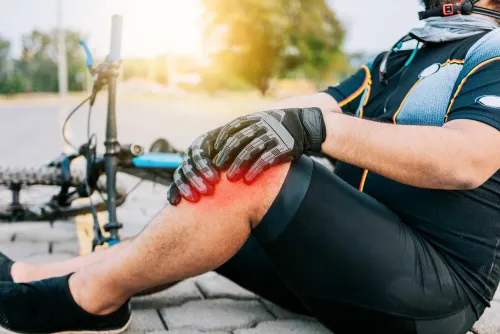
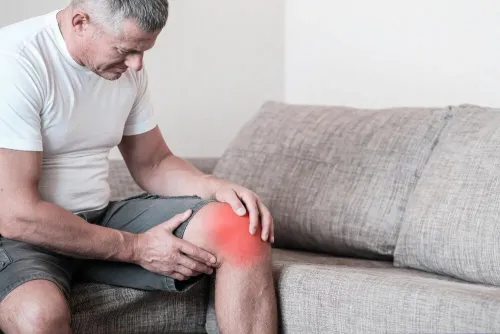
An unstable knee is one that cannot reliably control forward or rotational movement, not merely one with an abnormal MRI. A planted-foot twist, sudden change of direction, awkward landing or direct blow can tear the ACL, often with a pop, rapid swelling and immediate difficulty continuing.
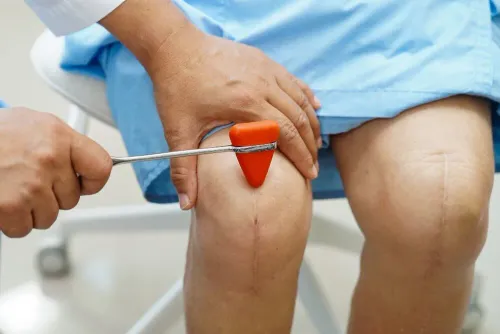
During assessment, a clinician checks motion, tenderness, joint fluid and ligament looseness. The Lachman test supports ACL injury diagnosis by measuring forward movement of the shin; the pivot-shift test assesses the slipping and rotating sensation associated with functional instability.
Common ACL tear symptoms include:
- A giving way knee during stairs, uneven ground or sudden turns
- Difficulty pivoting, cutting, decelerating or changing direction
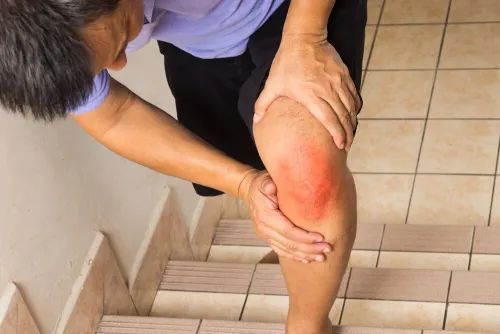
- Swelling after activity, even when pain has settled
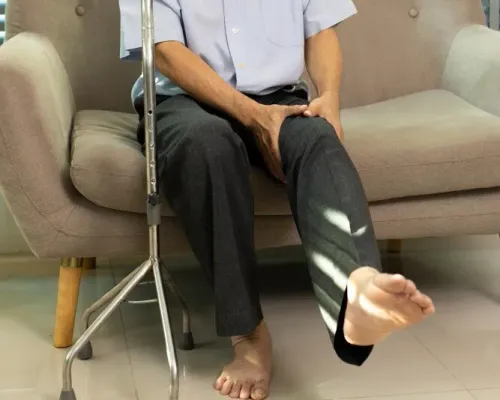
- Reduced confidence in the leg because you do not trust it to hold
X-rays and MRI answer different questions.
| X-ray | Shows fractures, alignment and bone changes | Does not directly show the ACL |
|---|---|---|
| MRI | Can show a partial or complete ACL tear, meniscus injury, cartilage damage and other ligament injury | Does not prove that reconstruction is necessary |
A person with an ACL tear can function well after rehabilitation and activity changes. Reconstruction becomes a treatment discussion when repeated giving-way episodes persist or pivoting, cutting, demanding work or sport remains unsafe. Functional symptoms and examination findings matter as much as the scan.
When is ACL reconstruction better than rehabilitation without surgery?
An MRI tear does not automatically make surgery the better choice. ACL reconstruction indications centre on repeated giving-way and your required activity, not the scan alone.
| Option | Better fit | Main trade-off |
|---|---|---|
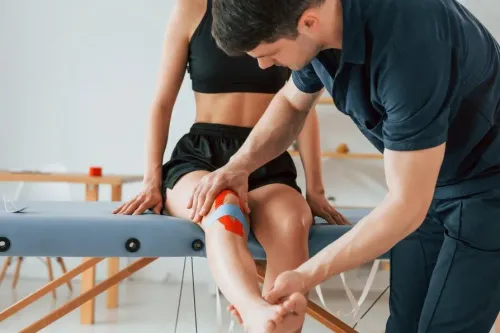
| Structured rehabilitation | Stable knee after a partial tear, or a complete tear without giving-way; useful for recreational activity with activity modification, bracing, swelling control, strength and physiotherapy | Pivoting, cutting and demanding work may remain limited |
| Reconstruction | Persistent instability during pivoting, cutting, demanding work or sport; repeated episodes, or repairable meniscus, cartilage or other ligament damage | Surgery and rehabilitation impose time, risks and reinjury; reconstruction does not reliably prevent arthritis |
Partial ACL tear treatment often starts with structured rehabilitation. Complete ACL tear treatment can also begin nonoperatively if the knee functions reliably, although a young athlete returning to cutting sports faces a stronger case for reconstruction than a recreational cyclist.
The KANON trial found similar average patient-reported outcomes at two and five years after rehabilitation with optional delayed surgery versus early reconstruction. Many participants later chose surgery because instability continued or their activity goals demanded it. This supports an individual ACL surgery or physiotherapy decision, not a scan-based rule.
AAOS guidance supports reconstruction within three months when possible to reduce additional meniscal or cartilage injury risk. Timing still depends on restoring knee motion, controlling swelling and assessing the person’s circumstances. DR YOGESH NARKHEDE can help a patient in Punawale weigh examination findings, imaging, instability episodes and activity goals before choosing.
Related services
Arthroscopy We offer arthroscopic evaluation and treatment for joint problems. View service → |
Sports Injuries We provide orthopedic assessment and treatment for injuries related to physical activity and sports. View service → |
What should you do before surgery, and how does graft choice affect the plan?
Before surgery, make ACL prehabilitation a treatment goal, not optional fitness. Reduce effusion, regain full knee extension and useful flexion, and restore quadriceps control and strength. Operating on a markedly swollen, stiff knee raises concern about postoperative motion loss.
Use this preparation checklist:
- Ask your surgeon which medicines, including aspirin, anticoagulants, anti-inflammatory drugs and supplements, could affect bleeding or healing; do not stop prescribed treatment without instructions.
- Arrange an adult to take you home and help during the first day or two.
- Plan time away from work, school, driving and sport, including transport while walking is restricted.
- Practise the exercises and crutch technique you will use after surgery.
ACL graft choices involve different costs and benefits:
| Option | Main advantage | Main trade-off |
|---|---|---|
| Patellar tendon graft | Strong fixation and lower failure risk in many comparative studies | More anterior-knee pain and difficulty kneeling |
| Hamstring graft ACL reconstruction | Usually less kneeling pain | Hamstring weakness, with greater laxity or failure risk in some groups |
| Quadriceps tendon graft | Useful alternative autograft with substantial tendon tissue | Harvest-site symptoms and rehabilitation demands still require discussion |
| Allograft | Avoids harvesting your own tendon | Higher failure concern in young or high-demand patients |
Young or high-demand patients are commonly considered for an autograft rather than an allograft. If growth plates remain open, age-specific tunnel placement and graft planning are essential; an adult strategy can injure the physes. The final choice should match skeletal maturity, sport, work, kneeling needs and previous injuries.
What happens during arthroscopic ACL reconstruction?
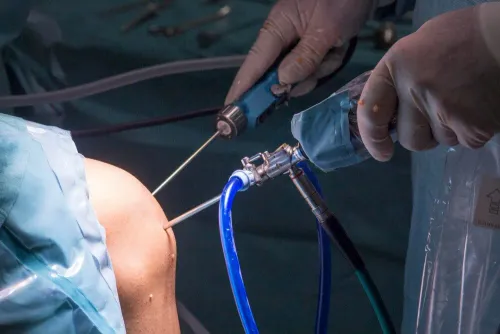
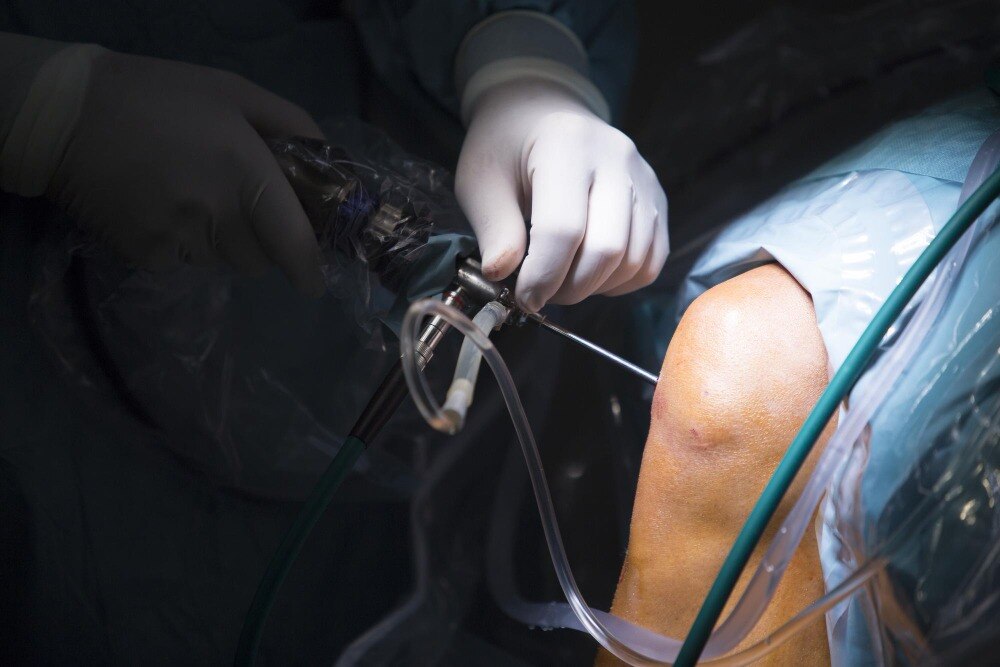
The arthroscopic ACL reconstruction procedure uses a camera and instruments through small portals around the knee. “Arthroscopic” describes this access method, not the size or seriousness of the operation; reconstruction still requires bone drilling, graft fixation and months of rehabilitation.
1. The surgeon inspects the torn ACL and the rest of the joint, including the menisci, cartilage and other ligaments.
2. The surgeon drills ACL bone tunnels through the femur and tibia at the planned attachment sites. These tunnels reproduce the ligament’s natural course rather than creating a passage in an arbitrary position.
3. A tendon graft is passed through the tunnels and secured with fixation devices such as buttons, screws or anchors. The knee is positioned while the surgeon sets appropriate graft tension, so the graft can control forward movement and rotation.
4. The graft reconstructs the ACL; the surgeon does not simply remove the torn ligament. Its purpose is to provide a new ligament that can restore mechanical stability as it heals into the bone.
A repairable meniscus tear is often preserved with meniscus repair with ACL reconstruction when retaining this load-distributing tissue is worthwhile. Repair can require slower or more restricted rehabilitation than isolated ACL reconstruction, whereas removing damaged tissue is not automatically the better option.
Lateral extra-articular tenodesis or anterolateral-ligament augmentation is selective, not routine. A surgeon may consider it for a high-grade pivot shift, generalized laxity, a young high-risk athlete or revision surgery, while weighing the added surgical morbidity.
What does recovery require before you return to sport or demanding work?
Return to sport after ACL surgery is a criteria-based decision, not a date on the calendar. ACL reconstruction recovery starts with expected pain and swelling, then builds capacity for demanding work, running, cutting and pivoting.
- Control pain and swelling while restoring knee extension and flexion. Persistent stiffness can limit walking and later impair movement.
- Progress quadriceps and hip strengthening, then add balance, landing mechanics and controlled single-leg tasks.
- Complete running and sport-specific drills without important effusion, giving-way or loss of movement control.
- Seek clearance only after full motion, near-symmetrical strength, acceptable single-leg and hop-test performance, controlled movement and psychological readiness. A calendar date cannot replace these findings.
In one young-athlete cohort, delaying return to knee-strenuous sport beyond nine months was associated with about a 51% lower reinjury risk for each additional month. That finding does not make nine months a universal clearance rule; returning too early with weak muscles or poor neuromuscular control increases reinjury risk.
Arrange clinical assessment for persistent loss of extension, recurrent giving-way, increasing redness or drainage, fever, calf swelling or breathlessness, or suspected graft failure. These warning signs can indicate ACL surgery complications, including infection or thromboembolism.
Reconstruction improves mechanical stability but does not reliably prevent post-traumatic osteoarthritis. Graft rupture and opposite-knee ACL injury remain possible, so ACL reinjury prevention continues after formal rehabilitation through neuromuscular training, landing practice and strength work.
Frequently asked questions
How do you know whether an ACL injury has made your knee unstable?
Instability shows up as giving way or loss of control during planted-foot twists, direction changes, awkward landings, or similar movements. MRI findings alone do not prove functional instability.
When is ACL reconstruction better than rehabilitation without surgery?
Reconstruction is considered when the knee repeatedly gives way or when instability interferes with demanding work, sport, or daily activity despite appropriate rehabilitation.
What should you do before ACL reconstruction?
Discuss your activity goals, injury pattern, knee stability, rehabilitation readiness, and graft options with your orthopedic surgeon before choosing a surgical plan.
What does recovery require before returning to sport or demanding work?
Recovery requires progressive rehabilitation, restored knee strength and movement control, and confidence with sport- or work-specific tasks before clearance.