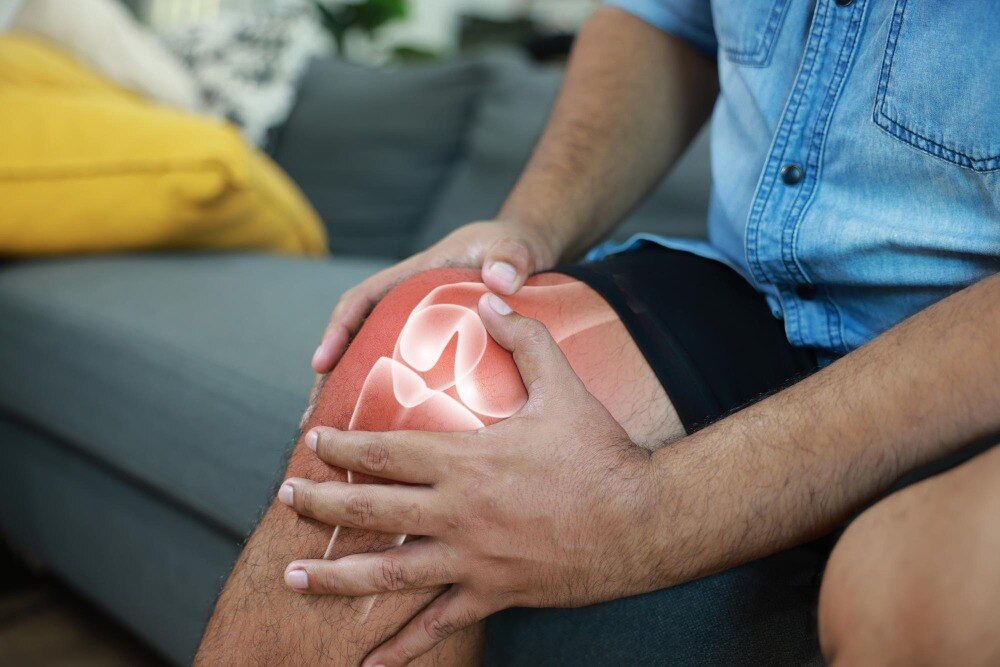
A knee can remain walkable after an ACL injury while still being unstable during turning, stair descent, or landing. By the end, you will know which symptoms suggest a significant injury, what to do during the first 24 to 48 hours, and when a clinical assessment is urgent.
Key takeaways
- A popping sound, immediate pain, and swelling can signal an ACL injury.
- Walking normally does not rule out a torn ACL.
- Use ice, compression, elevation, and protected weight-bearing initially.
- Clinical stability tests help distinguish ACL injury from similar knee problems.
What the ACL Does and Which Symptoms Appear First
The anterior cruciate ligament (ACL) runs through the knee and limits the shinbone’s forward movement beneath the thighbone. This ACL function also helps control pivoting, cutting, sudden deceleration, and landing, when the knee must resist twisting and shifting.
A twisting injury, sudden stop, awkward landing, or change of direction can produce these early warning signs:
- A popping sensation or sound at the moment of injury
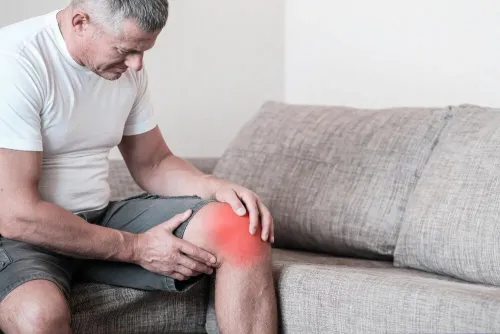
- Knee pain after injury, often with difficulty continuing activity
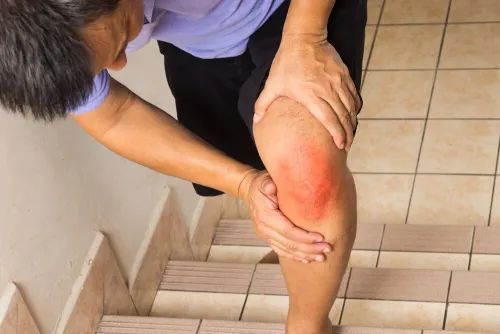
- Rapid swelling, sometimes within a few hours
- Reduced ability to bend or fully straighten the knee
- Difficulty bearing weight
- A feeling that the knee is unstable, shifting, buckling, or giving way
| Finding | What it can indicate | What it does not prove |
|---|---|---|
| Pop during a twist or sudden stop | Possible ACL injury | A pop is not required for an ACL tear |
| Pain followed by swelling | Significant internal knee injury | ACL damage alone; fractures and other injuries can cause it |
| Trouble walking or continuing activity | Loss of function after injury | That the ACL is completely torn |
| Knee feels unstable during movement | Poor control during pivoting or deceleration | Instability from the ACL specifically |
A missing pop does not rule out an ACL tear. The pattern matters more: an injury followed by pain, swelling, reduced motion, or inability to continue activity deserves assessment, even if you can still walk.
Why Rapid Swelling and the Ability to Walk Can Mislead You
Swelling within a few hours deserves attention, but it does not identify an ACL injury. Rapid knee swelling can result from hemarthrosis—bleeding inside the joint—after an ACL tear. It can also follow:
- A fracture
- A patellar dislocation
- Another major knee injury
Swelling that appears later often reflects irritation of the joint lining or associated tissue damage rather than immediate bleeding. Continued activity can keep an injured knee inflamed, and swelling that returns or persists after the initial episode needs assessment.
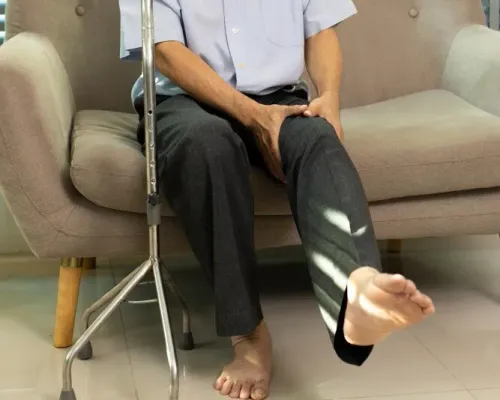
Can you walk with an ACL tear? Yes. After the first pain and swelling settle, many people can bear weight and walk, especially in a straight line. Walking tests whether you can tolerate weight, not whether the ACL controls forward movement of the shin and rotation.
A torn ligament can therefore coexist with a knee that feels acceptable in a quiet room but shifts during turning, stair descent, uneven-ground walking, or sudden stopping. Weight-bearing ability does not prove that the ligament is intact or that the knee is stable.
How ACL Instability Feels and Which Injuries Can Mimic It
A knee giving way during turning, changing direction, descending stairs, walking on uneven ground, or landing from a jump indicates mechanical instability, not pain alone. Knee buckling or a shifting sensation means the joint is not controlling movement reliably; turning knee pain without slipping or collapse points more toward irritation.
Pain and swelling can settle while pivoting instability remains. Repeated giving-way episodes can damage the meniscus or joint cartilage, so do not test the knee with cutting, twisting, or sport.
Injuries with similar symptoms include:
| Injury | Overlapping clues | Clues that point beyond an isolated ACL problem |
|---|---|---|
| Meniscus tear | Pain, swelling, difficulty bending | Catching, joint-line pain, or a knee that cannot fully straighten from a displaced fragment |
| Medial collateral ligament injury | Inner-knee pain, tenderness, swelling | Pain focused along the inner ligament, especially after a sideways force |
| Patellar dislocation | Giving way, swelling, apprehension | The kneecap visibly shifted or moved out of position |
| Fracture | Severe pain, swelling, difficulty bearing weight | Deformity, marked tenderness over bone, or inability to use the leg |
| Ordinary knee sprain | Pain, stiffness, mild swelling | Symptoms improve steadily without recurrent shifting or locking |
Persistent swelling, catching, joint-line pain, or loss of full straightening needs assessment. Swelling or pain can restrict movement, but a displaced meniscal fragment can mechanically lock the knee; repeated instability also warrants evaluation for associated cartilage, bone, or ligament damage.
What to Do During the First 24 to 48 Hours
During the first 24 hours after a suspected ACL injury, stop pivoting, cutting, jumping, and repeatedly testing whether the knee will hold. Protect it from unnecessary movement. Use crutches or a knee brace after injury only when they provide safe support; do not force painful bending, straightening, or weight-bearing.
Apply ice 15 to 20 minutes at a time through a cloth barrier, repeating every 2 to 3 hours while awake. Elevate the leg above heart level when resting, and arrange a clinical assessment rather than waiting to see whether instability disappears.
Seek emergency evaluation immediately if you have:
- A visibly deformed knee
- Inability to bear weight
- A cold, pale, or numb foot
- Loss of pulses in the foot
- Severe or rapidly increasing swelling
- A locked knee that cannot fully straighten
- Severe pain after a high-impact accident
These findings raise concern for fracture, dislocation, or neurovascular injury, not merely an ACL sprain. A knee that stays locked needs prompt assessment because swelling, pain, or a displaced meniscal fragment can block movement. Even if you can walk after pain settles, that does not prove the ACL is intact or the knee is stable.
How a Clinician Determines Whether the Knee Is Truly Unstable
True knee instability is determined by examination, not by symptoms alone. Pain, swelling, and a feeling of giving way can follow an ACL tear, meniscus injury, patellar dislocation, or fracture, so they cannot confirm which structure failed.
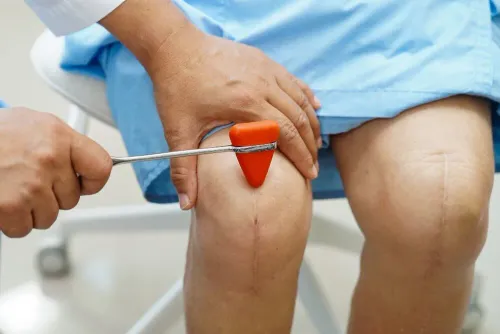
The Lachman test is the key clinical examination. With the knee slightly bent, the clinician stabilizes the thigh and gently pulls the shin forward, assessing excess movement and the quality of the endpoint. The anterior drawer test checks forward shin movement with the knee bent further, while the pivot-shift test assesses rotational slipping.
Pain and muscle guarding can restrict movement and produce misleading results, so trained examination matters.
An MRI for ACL tear can show the ACL and associated meniscal, cartilage, bone, or collateral-ligament injuries. It does not measure how unstable your knee feels during stairs, daily walking, cutting, or sport.
A clinician also considers:
- Whether the tear is partial or complete, and whether the remaining fibers still control the knee
- Your activity goals, such as jogging, football, or recreational walking
- Catching, locking, joint-line pain, or persistent swelling that suggests associated damage
- Whether repeated giving-way episodes are raising the risk of further meniscal or cartilage injury
- In children and adolescents, the condition of the growth plates and pediatric-specific injuries
A local orthopedic assessment with DR YOGESH NARKHEDE in Punawale can clarify whether you need examination, imaging, protection, or a structured return to activity.
Related services
Sports Injuries We provide orthopedic assessment and treatment for injuries related to physical activity and sports. View service → |
Arthroscopy We offer arthroscopic evaluation and treatment for joint problems. View service → |
Frequently asked questions
What are the first warning signs of an ACL injury?
Early signs include a pop or tearing sensation, knee pain, rapid swelling, restricted movement, and a feeling that the knee may give way.
Why can walking after a knee injury be misleading?
You may still walk with an ACL tear because walking does not fully test pivoting, sudden deceleration, or rotational stability.
What does ACL instability feel like?
Instability can feel like the knee buckling, slipping, or shifting during turns, stairs, uneven ground, or sudden changes in direction.
What should you do during the first 24 to 48 hours?
Protect the knee, reduce weight-bearing, use ice wrapped in a cloth, apply comfortable compression, elevate the leg, and arrange a clinical assessment.
How does a clinician determine whether the knee is unstable?
A clinician compares both knees, checks swelling and movement, performs Lachman and anterior drawer tests, assesses pivoting when appropriate, and may order an MRI.
Related service
Physiotherapy Physiotherapy We provide physiotherapy as part of our orthopedic and recovery-focused care in Punawale, Pune. |